
Disclosure Day
Lessons learned in the process of becoming a Jedi

I could blame a woman. I could blame my boss; I could blame my school, but really it was just a fault in my own personality. As for this setback, I don’t blame my bipolar 1 disorder, which is progress. This is a lesson I was going to have to learn at some point- lessons learned in the process of becoming a Jedi Knight, I mean therapist.
I was really looking forward to finishing up my internship and graduating in August. August 26th to be exact. All I had to do was not screw up. Continue to gather clinical hours, pass one test to finish my masters, pass another test for the state of Georgia, then licensure. As an associate professional counselor (APC), my counsel would be credentialed, therefore worthy of financial compensation. I was this close to being a grown-up.
It was pointed out by my supervisor (boss) at some point during my first internship that I have the tendency to catastrophize. A standard cognitive distortion that leads one to worry that the worst possible thing is going to happen. I get randomly called into my boss’s office; he says close the door, my palms start to sweat because I imagine I’m getting fired. Nope, he just wanted to ask about client progress, whew. Well, I didn’t get fired, but we’ll get to that. For me, catastrophizing is a learned behavior. Repeated patterns of the worst possible thing happening, like tearing my ACL during the preseason football game senior year of high school.
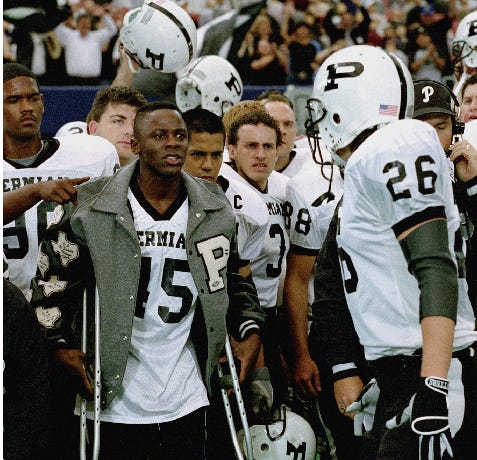
Have I not told that story yet? The moral of the story is that shit happens and continue to aim up, but I think the process of writing about it helps build resilience.
I’ve been living an infantile life for most of adulthood. There have been periods where I’ve been financially independent, which was fulfilling in its own right, but if I’m being honest, since my diagnosis at 22, I’ve pretty much always had to reach out for parental help if, say, my car tires blew out. I haven’t had a spare $400 in quite some time.
Therapist internships are unpaid. While I’m sure there are exceptions, I haven’t seen any. The trick with securing an internship is finding a site that can offer the required direct client hours necessary to graduate. Some therapy offices just don’t see enough clients to pass sessions along to interns. The path I’ve been on since starting this Substack has been classes, practicum, internship 1, then internship 2. I’m done with all my required classes now and ended up with a 3.5 GPA, which I am happy about. Practicum is just a fancy word for the first, less intensive internship. I already had one school-related setback last year when I had to redo my 17-week practicum semester.
While in practicum or internship, for school we have to take a concurrent course that meets once a week to discuss the challenges and strategies that accompany the process of gaining clinical hours. This should have been as easy as showing up for a two-hour group Teams call once a week, but I managed to screw that up by writing a 10-page paper instead of a 12-page paper. To my fault, I glazed over the instructions, assumed I knew what I was doing, and missed the last paragraph of the paper requirements. I didn’t see that I needed to scroll down to another page, whoops. Thus causing me to fail the paper and fail the class. With the time that's passed since then and with all the self-reflection failing has caused, I stand by my point that my professor then was a total bitch.
It was an honest mistake that, yes, I shouldn’t have made, but she should have let me correct it. There was plenty of time. I wasn’t even aware of my missing paper requirements until the day before final grades were due. Because you know, she took two months to grade the paper. Then, after pleading to let me correct my mistake, all by email- a huge downside of doing school online- she gave me 48 hours to resubmit. Thankfully, I was watching my emails and resubmitted only for her to recant her offer to let me correct, stating too bad, so sad; you’ll have to retake the class. Which means my last 17 weeks of working for free was null and void. Even with the failing paper, I got a B in that first practicum class, but due to the fine-print syllabus requirements, I still failed the semester. I think I was schemed to make me pay for another semester of college; great, put it on my tab. During this extended period of panic, I did everything I could to challenge the ruling with the school, and I brought emailed receipts, but it’s nothing to administrators to fuck over another faceless online student.
So I did practicum twice. I try to be thankful for the extra clinical hours because I did become more comfortable in my practice from one semester to the next.

It takes about 25-30 working hours per week to get the necessary requirements to pass our classes and work toward graduation and licensure. I often refrain from getting on my pedestal, complaining how the system I’m in is flawed. In theory, it seems the process is designed for wives who have working, supporting husbands. Probably a big reason why 80% of counselors or therapists are women. I think of this disparity as a career advantage; like becoming a male nurse, my services will always be necessary, and I get to stand out in the field as a diverse hireable candidate.
I’ve had both male and female therapists during my 25 years being diagnosed with bipolar 1 with psychotic tendencies. I’ve been with Dr. Dave now for probably 8 years, and there is an unquantifiable level of comfort that comes with sharing and getting feedback from another man. It also helps that he’s conservative and Christian with a pastoral background. The ChatGPT stats are a rough estimate, but it spit out that 70% of male therapists identify politically as liberal. If I’m being crass, and let’s keep it real: most of those therapists are probably gay. So, I’m a straight white male who likes to listen; I’m betting my future career that there is a market for the niche I fit into.
The site I was gaining clinical hours at is all men. Mixing men and women in treatment offers up a lot of distraction, so they cut out the problem area. I got to walk through the healing process with these men and watch them become more comfortable with therapy. In general, as the subset male population becomes more comfortable with the idea of therapy, the country will need more male therapists. Think less of seeing a head shrink and more of an ability to commend one for seeking help. It’s not a weakness to say out loud our vulnerabilities. Christ, have you seen the suicide statistics? How about fatal fentanyl overdoses? Maybe it isn’t best to just bottle everything up.
We’re communal creatures, and we evolved to lean on our fellow tribe members during the hard times. I’d say that the tools and skills learned in therapy will be greatly appreciated by your wife one day. Become the man who knows how to listen and use feeling words to describe a current predicament. Just theory, and if I had women figured out, I wouldn’t be single.
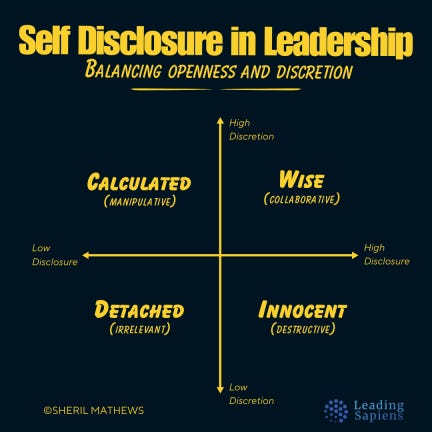
In therapy, self-disclosure is when the therapist tells the client something about themselves. Like “I’m married,” “I’m divorced,” or “ I have two kids.” It can be anything. Basically everything I’ve written on Substack can be classified as self-disclosure. In session, clients will try to flip the tables and ask the therapist questions. It’s only natural when opening up to attempt to balance the act so as not to feel like a deep conversation is one-sided. It is just important for the therapist to recognize if the client is asking to deflect from their own problems. Like that’s enough talking about me; let’s talk about you.
Self-disclosure builds rapport; if you’ve read a few of these articles, don’t you feel like you know me kinda well? In a good conversation among friends, reciprocal vulnerability drives conversation deeper. These are the good talks, the ones I enjoy. I thought that in session there was nothing wrong with saying a little something about my life to my clients when asked. If they were having a hard time talking, I would naturally fill that void, and to my pleasure, they would respond and have a lot more to say about themselves. I kinda thought of this as my superpower, getting people who typically have a hard time talking about themselves to open up. It felt right, and I witnessed healing from the process. As I’ve since learned, self-disclosure is considered a cheap trick of therapists and, taken out of context, can be seen as unprofessional.
The problem is clients are not friends. As I discussed in my Practicum Ethics post, I was vulnerable to wanting to be friends, but as I think I demonstrated, I was aware of the potential problem. I genuinely liked the five guys in my caseload, and I got to see them develop bonds amongst each other over the course of the six months or so I was practicing at that site. They were all single guys between the ages of 20 and 40 who happend to have an unmanageable drug habit, mostly meth, fentanyl, and painkillers. Over the course of seeing my caseload for an individual hour plus group time twice a week, I don’t think it’s weird that we got to know each other. So they would ask me how my weekend was, if I was talking to any girls, or what my experience with addiction has been.
I didn’t think that by briefly answering these questions I was breaking some sanctimonious rule of counseling. Well, I got reported to my supervisor after one of our weekly process groups. I know that this happend after a session when I had my five clients plus two extra guys. The new clients had been farmed out to my group due to my supervisor being out of town and unable to host his weekly group.
The three things I did wrong: One, I said I had been seeing a girl that I was excited about; then, when they followed up, I informed them I was going through a bit of a rough breakup. Two, I told them that I went out with friends the previous weekend. Then, after being pressed, I reluctantly told them that this involved bouncing around a few bars. Three, I related to one of the new guys who was abusing ADHD stimulants. I just said I understand the impulse due to the fact that I’m prescribed the same medication.
One of those two new guys ran back to my supervisor saying I made him feel uncomfortable. This happend to be the week that marked the halfway point of my semester, which involves my supervisor sending a progress report to my school. Upon which he thought it was necessary to inform the school of my transgressions.
School freaked out and pulled me from my internship. Catastrophe.
Through school, I was sent to the “Remediation Committee.” An email chain conglomerant of administrators and bureaucrats who judged me guilty of unprofessional behavior. They put my school account on hold until I finished my tailor-made six-week remediation curriculum. Well, the next semester started in about five weeks.
During this period of panic, my supervisor acted as if he was surprised by my school’s reaction or, as he stated, overreaction. He said he wanted me to continue my practice there and that I could come back and finish my internship once this process with school was all sorted out. As he and I were thinking, that would be during the next semester in about five weeks. I could survive a punishment of being on my ass for five weeks.
Well, due to my forced circumstances that were out of my control, I wasn’t able to start back then and was locked out of the internship for the subsequent 17-week semester. The best part is that a few weeks after being forced to leave, I was finally able to confirm my possible time frame to get back to work by this remediation committee, and my boss then informed me that they had not held my internship spot and I would not be able to come back for my next possible semester. Thanks dude, from the bottom of my heart.
What pissses me off is this internship phase is supposed to be a time of learning, which means allowing room to make mistakes. I didn’t err on the side of ethics. The way this all worked out, I don’t think the punishment fits the crime.
So what have I learned from this experience?
This was a lesson I would have had to learn eventually. It’s unfortunate that I always have to learn the hard way, but that way I don’t repeat mistakes. I try to frame this as it’s better to learn about the potential pitfalls of self-disclosure now while still a student rather than once I’m credentialed and my license is threatened.
Part of my remediation has been to work with two different groups of professors, of whom I picked their brains on what I did wrong and how things could have been said differently. Funny enough, all of my assigned professors agreed that blogging is a great space to vent out my pent-up need to self-disclose. I elected not to provide a link to this Substack for them. If they want to find me, they can find me. Which is actually what they coached me on going forward. To clients, I can say how journalling or blogging helps me, but I should not direct them to my site; if they find it on their own, that’s on them and no big deal.
Going forward, working with clients, my goal is zero self-disclosure. Realistically, this means keeping things very limited and brief. The best practice is to keep things about myself and my personal life as vague as possible; there are other ways in session to build rapport with clients. These skills I jokingly refer to as “Jedi mind tricks” or linguistic jujitsu. I’ll teach on these techniques in more detail another time, but I’ll list a few out here: paraphrasing, reflecting a feeling, reflecting content, reflecting meaning, open questions, summarization, and psychoeducation. It’s pretty easy stuff and doesn’t require a masters level education to learn.

The best note I took from all this extra required learning is you don’t want to tell a client something that puts them in a situation where they can feel sorry for you. So I shouldn’t have told them about the breakup, which means I shouldn’t have originally told them about the girl.
Also, due to the nature of working with substance use disorder and men in recovery, I shouldn’t have told them I went out to a bar with friends. My thinking was that people in recovery have to deal with the fact that other people who aren’t addicts are able to drink socially. I thought I was providing an example of what responsible behavior looks like. This went against the culture of the site, which is why stating so was unprofessional.
The process of finding a new internship during the required time frame provided by my school has been stressful. The kind of stress that used to trigger my acute bipolar 1 symptoms. It was once again a pain in the ass, but I was able to get my six-month miracle drug injection, Invega Halfyeara. It’s been nice to reflect that this stress and the problems I’ve been dealing with have not been rooted in my disorder. Just people problems of a flawed human.
I am happy to report that I have three offers to start my new internship 1 in August. It just breaks my heart a bit that I’m starting this all over in August when I was supposed to be graduating. For me, graduating means licensure, licensure means real money, real money means I can find a woman and potentially start a family. To those who want to belabor and argue that last point, I say grow up. No woman worth having wants to start a real relationship with an Uber driver, which is how I’ve been making ends meet in the meantime. I’m open to being proved wrong on this.
It hasn't been easy, but I’m finally digging myself out of this hole I fell into due to mental health crisis manifesting over a decade ago. Starting an internship again will signal to my brain that things are again moving forward and that I’m catching my life up to where all my friends and peers are. Wouldn’t that be nice.
Oh, and as lame as the movie was, Disclosure Day hit on a lot of points that I think are true. The kind of points those running things want to show us so that we can dismiss them as nonsense. My (hopefully last) psychosis was following along a story of aliens and astral projection. Fun stuff until you get scared and paranoid. Drop a like if you’re with me.
"Adversity is always the partner of progress." — John C. Maxwell