

I can’t be the first “neurodivergent” person to think of themselves in comparison to the mutants from X-Men. We are told from the onset that a flaw in our genetics is the best explanation for what is wrong with us. This fact caused my mom to track down her biological father to get some answers about me after my diagnosis. Before this, my family had no idea where my affliction came from; now things make a little more sense. If only our conditions were simple enough to narrow down to one mutant gene.
Bipolar disorder has a strong genetic component, but it is polygenic—hundreds or potentially thousands of genetic variants can contribute to vulnerability. The latest large-scale research has identified nearly 300 genomic locations associated with bipolar disorder.
The genetic research also suggests that Bipolar I and Bipolar II aren't genetically identical. Bipolar 1 shows stronger genetic correlation with schizophrenia, while Bipolar II shows stronger correlation with major depression.
The research is incomplete, but there seems to be some correlation between the Cluster B personality disorders being inherited by offspring as bipolar disorder. My mom would describe her late biological father as a Class A Narcissist. They were able to work on their relationship for the past 15 years, but if she had grown up with him, we wouldn’t refer to him as her biological father.
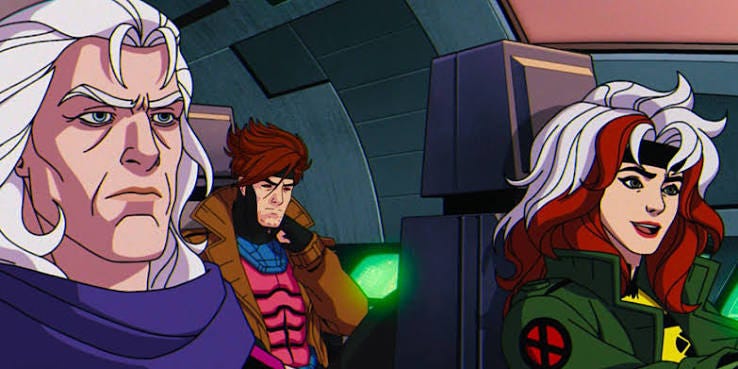
The four Cluster B personality disorders are: Antisocial Personality Disorder (ASPD), Borderline Personality Disorder (BPD), Histrionic Personality Disorder (HPD), and Narcissistic Personality Disorder (NPD).
This group of personality disorders deserves its own article, but I have really enjoyed learning more about them in my practice. The main thing to know is that these are developmental disorders, which means they develop sometime during childhood. There is probably some genetic predisposition to them as well. But in the nature vs. nurture argument, these are mostly caused by nurture. Bipolar disorder, however, was probably always in my nature. Notice how these uses of probably leave a lot of room for more to be learned about these conditions. Another reason I want to be a tip-of-the-spear therapist in my practice.
What I think is that my grandfather had NPD. He was never diagnosed because why would he seek treatment? My mother, whom I love and don’t want to call out, is somewhere in between BPD and HPD. She works on herself and has gotten dramatically better over the years, but has never been diagnosed with either personality disorder. I didn’t get into the therapeutic practice to diagnose my mother, but the idea has at least been a thought. We have a great relationship, and I wouldn’t change her if I could. Anyway, exploring my genetic genogram (exampled below) shows my potential history of inheriting the X-gene that caused my bipolar 1 disorder.
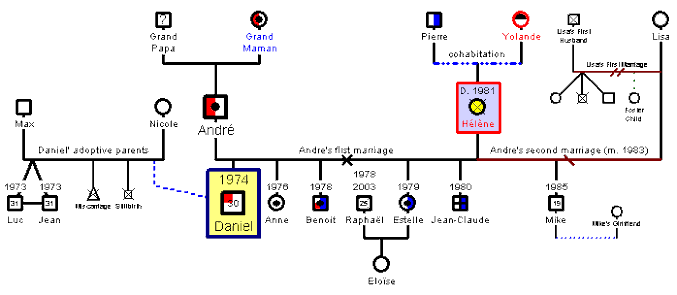
This is my best guess or theory as to why I’ve had the life I’ve had. Of course, our genetic history goes farther back than our granfathers. This is just what I have to currently work with. Wouldn’t it be nice if, through our genealogies, we could trace superpowers instead of illnesses and disorders?
Growing up, the X-Men canon I’ve heard compared to that of the gay rights movement, and I can see some parallelism there. It makes sense, as the movies were coming out, gay rights were the buzz on the news. Maybe there is a gay gene, but so far it has not been proven. There have been multiple genes identified that could be the cause of bipolar disorder. When I’m feeling good, I reframe my disorder as a superpower. Reframing is simply a technique to think about something differently, choosing to believe a different perspective.
The show X-Men 97 started coming out in the past few years as a play on the original cartoon that debuted from 1992 to 1997. X-Men 97 is a continuation of the classic X-Men: The Animated Series. It's not a reboot. Marvel describes it as essentially a next-day continuation of the original series. Not that I remember where the show left off 29 years ago.
Distant memories of being 7 years old or younger watching Saturday morning cartoons. I don’t remember everything from the show; in fact, I don’t remember much besides the ensemble of characters. The new show 97 plays on the viewers’ nostalgia effect by using original drawing styles and character designs. Most notably, using the same music intro as the original. This is how I know that I used to love the original cartoon as a young kid. This theme song takes me back. This theme song hypes me up. Hearing this from another room had me boyishly running to the T.V.
The original series frequently dealt with prejudice, discrimination, genocide, political extremism, identity, and coexistence. X-Men '97 takes those themes and pushes them considerably further. While these themes can of course relate to many aspects of human life, from my perspective I can’t help but notice the congruencies that match with the neurodivergent community. So what do I think are my superpowers?
If I’m looking at myself through rose colored glasses, I would say my superpowers are empathy, creativity, and passion. Do I feel this every day? No. But I would say having a diagnosable brain disorder proves that my mind works differently than most. It is estimated that 0.95% of the population has bipolar 1 disorder and has experienced psychosis. When I’m feeling good, it’s nice to be viewed as unique. Of course, this is a practiced reframe from originally being diagnosed and feeling cursed. It takes faith to consider that there are some positives to having a condition that consistently crashes one’s life off course.
I think that due to the nature of my mood disorder, I am more emotional than most. Mood is an interesting concept, but I think about it as the colorful lens that permeates emotion. As I’ve said before, I think the default state of the bipolar is depressed. This may be especially true for folks who have bipolar 2. The other variant of my disorder is commonly diagnosed as a cyclical depression that’s resistant to standard antidepressant medication. So most of the time I would say being bipolar is not a good thing. But maybe when my life is on track, and things are moving forward, I can feel happier than most. Unfortunately, it’s this happiness that often precedes my bouts of mania. But with my medication, I’ve found myself able to stay in some sort of in-between zone. I can feel good and be happy without letting things go off the rails.
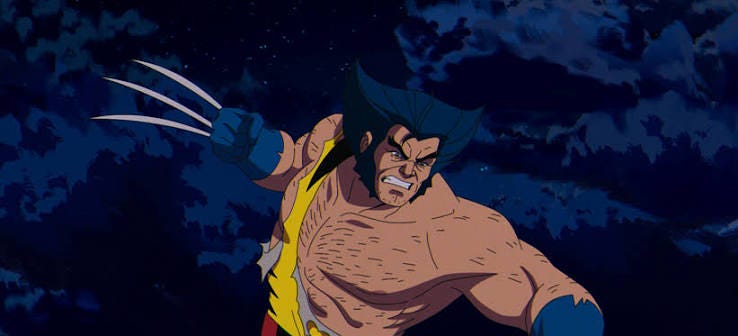
It is at these times that I feel I can be more passionate than most. As said in the TV show The Chosen, “strong passion can be a good thing when channeled for righteousness.” But as displayed in the show, passion can be to our detriment. Quick to take offense to what may just feel like a personal attack, quick to anger, quick to escalate to altercation. On the other side of the coin, I am probably more fearful than most. Passion and fear are closely related because both are high-intensity emotional states that can strongly direct our attention and behavior. In some ways, they are opposites; in other ways, they can reinforce each other.
“Fear is the path to the dark side. Fear leads to anger. Anger leads to hate. Hate leads to suffering.”— Yoda
Passion is an intense attraction or commitment toward something you value or desire. It’s to say, I want this. This matters to me. Passion can motivate you to pursue relationships, careers, goals, beliefs, creativity, or personal growth. Fear is an emotional response to perceived danger, threat, or potential loss. It tends to say, I could lose something. I need to protect myself. Fear can cause avoidance, caution, preparation, or defensive behavior. Interestingly, the things we're most passionate about can also become the things we're most afraid of losing. So if passion is part of my arsenal of superpowers, it comes with an offset of fearfulness.
Passion → attachment → possibility of loss → fear
The possibility of loss is where I often catastrophise. Sometimes the stronger your passion for something, the more vulnerable you become to fear surrounding it. I was passionate about my internship, yet fearful of screwing it up. Well, I managed to screw it up, catastrophie. Catastrophizing is a cognitive distortion in which a person automatically assumes that the worst possible outcome will happen, often without enough evidence to support that conclusion. It’s essentially the mind taking a problem and mentally escalating it into a catastrophe. Well, my life has been full of catastrophe, so I’d say this is a learned behavior I’m working on.
Writing is the best way I express my creativity. Whether that be in my daily journal or here on Substack. Thinking about it objectively, my last post, Self Disclosure} A Layered Approach, should have probably just been a personal journal entry rather than a post here. But maybe it’s worth keeping up as an example of hypomania. What caused this? I didn’t sleep the night before writing the article; I was studying for my CPCE exam, which is a test necisarry to pass for my Clinical Mental Health Counseling masters. I’m happy to report that my last-minute cramming worked and I passed the exam! I’m even happier to report that my bout of hypomania did not turn into full-blown MANIA. Hypomania symptoms include risky behaviors such as posting something I knew was silly, but I’m not too embarrassed about it. I knew I was feeling good; I knew I hadn't slept, took my as-needed Seroquel, and got some sleep. Breaking my historic cycle of hypomania, mania, and eventually psychosis. Back to baseline.
Empathy as a superpower is something I explored in my first post, Counselor Troy. How I wish I had Counselor Troi’s psychic ability as performed in Star Trek TNG. In Star Trek: The Next Generation, Counselor Deanna Troi has a form of telepathic empathy. Colloquially, she’s referred to as empathic. She is a Betazoid, a species with naturally developed telepathic abilities. Her ability is best described as the capacity to sense and perceive the emotions and emotional states of other people, rather than simply understanding them intellectually. The show does a great job of demonstrating how this ability can be useful in many situations. Another reframe of my disorder is that my natural ups and downs in mood give me a better understanding of those experiencing deep emotions or crisis.
“In the battlefield of the mind, my will will prevail.” - Professor X
I have a great X-Men memory from my youth involving my mom and me. The year was 2000, and I must have been 9 years old when the first commercials came out for the X-Men live-action movie, the first one staring Huge Jackman as Wolverine. The first thing I ever wrote for publication was The Wolverine Experience. Need I say, the character had an influence on my life. So the movie trailer came out, and I remember being super excited about it. And I remember at the same time profound disappointment at the end of the trailer when the rating PG-13 was displayed.
See, I wasn’t allowed to see PG-13 movies at the time. What can I say? My parents loved me. Yes, I hear the judgment of being a coddled child. Hell, I had to argue with my mom to let me watch SpongeBob around that age. Though SpongeBob dissenters might have been on to something about the character, society has gotten a lot gayer since that show came out.
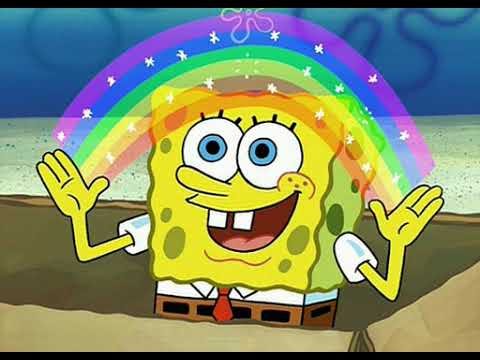
I also remember being very intrigued that this X-Men movie was for adults. Like PG-13 meant there might be blood and curse words. Very exciting as a 9-year-old. The only reason I would have had this excitement that I remember is if I had been watching the original X-Men animated show sometime between 1992 and 2000. A formative time of my youth.
So I was disappointed I wasn’t going to be able to see this movie in theaters. I don’t think I even considered asking my parents, but maybe I did. Because one day, I’m at my friend’s house across the street, and my mom calls their house (landline) to tell their mom to send me home to go shoe shopping for back to school. Thinking back, the timeline adds up because the movie came out that July. I remember being confused because my mom and I had just the week before gotten shoes for the start of the upcoming school year.
Mom picked me up in the car while I was expressing disappointment for her making me leave my friend’s house early. She let me go on then cut me off and said that she had something important to tell me. “So we're not actually going shopping; we’re going to see X-Men!” I screamed, and she echoed my excitement. Still probably my favorite movie-going experience; hopefully I didn’t pick up any nasty PG-13 lingo through my viewing. I did walk away from that theater with a huge crush on Rogue.
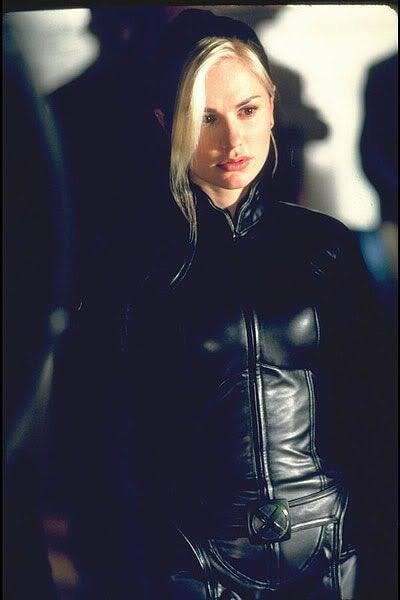
It’s definitely a positive framework that allows me to compare my genetic imperfection with the mutants of the X-Men universe. Like, is there really any benefit to my disorder? The more I watch the show now, the more parallels I draw to my beliefs about our modern society. The show has superpowered mutants discriminated against for being born with the infamous X-genes, aliens, secret societies that run the world, and superhuman monsters bent on establishing their order.
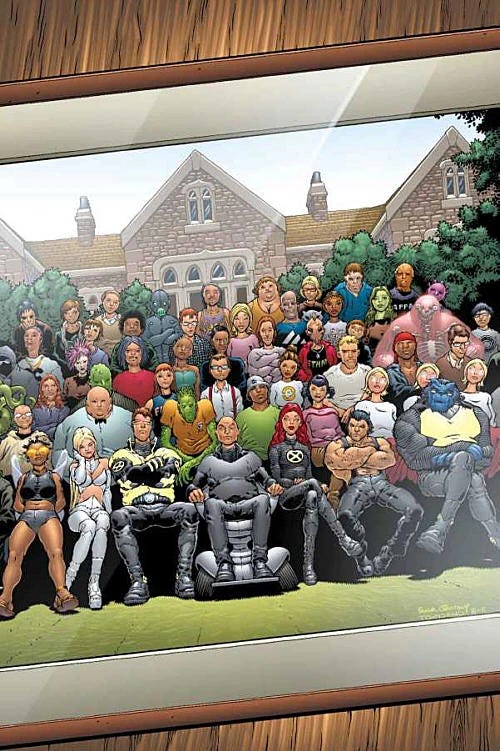
What our world is lacking is a Professor X. A mutant whose goal is to help other mutants while advocating for peaceful coexistence between mutants and humans. Someone willing to admit to their diagnosis and use their condition to help others afflicted. Maybe start a school and train others on how best to use their powers. I think it’s only a matter of time for someone with these qualities to show up.
Great write up! Very interesting!
I could talk about this for hours! You’re a brilliant young man. Keep pushing!